
Designing Around TPOs
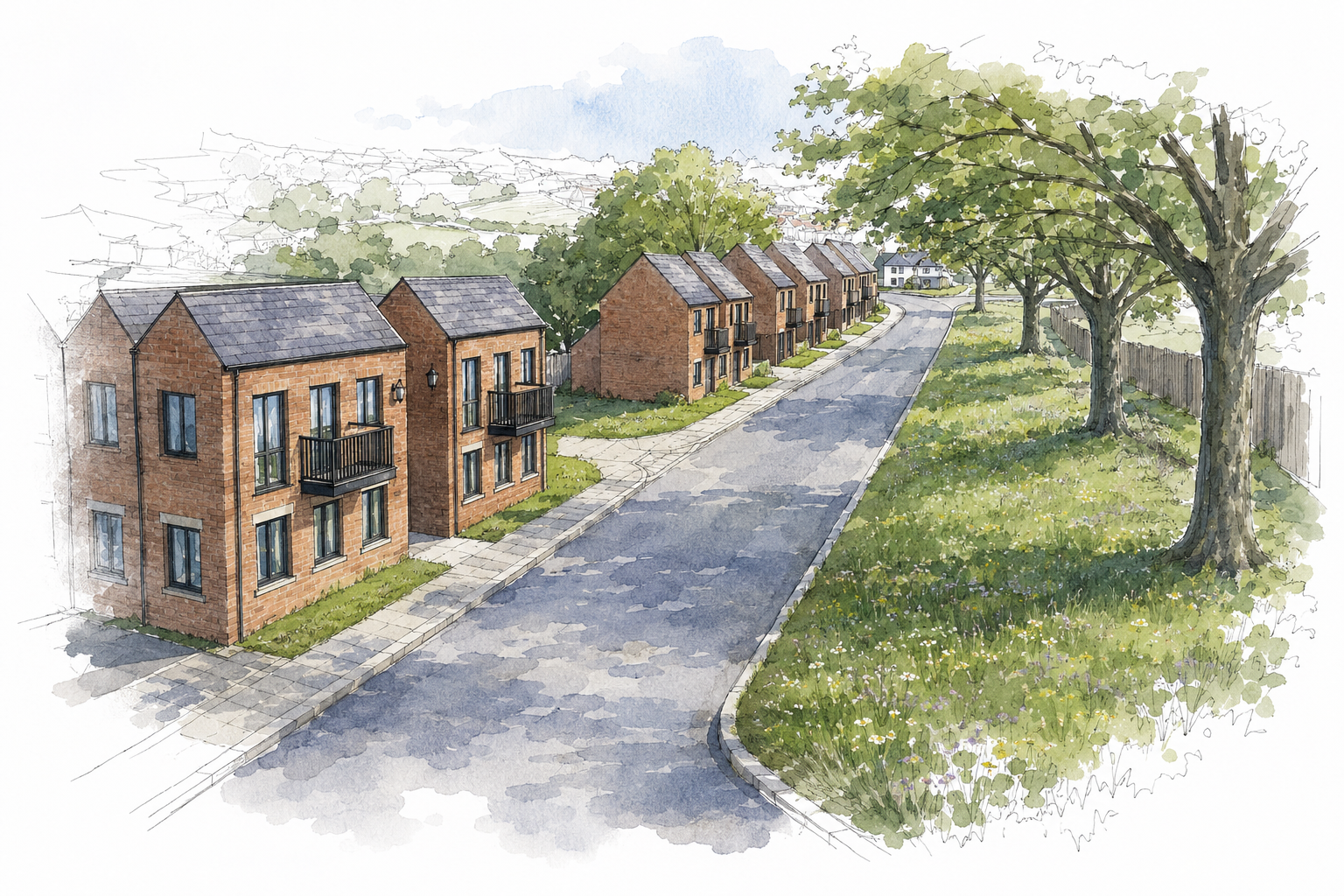
Some sites don't present a blank canvas.
They present a puzzle.
At first glance, this site appeared capable of accommodating a relatively straightforward residential development. A closer examination revealed a far more complex picture. Mature protected oak trees, significant changes in ground level, root protection areas and planning constraints all combined to limit what could realistically be achieved.
The obvious solution would have been to compromise the landscape.
Instead, the landscape became the starting point.
The development evolved through numerous iterations, with roads repositioned, buildings reshaped and construction methods reconsidered to allow the existing trees to remain as defining features of the scheme rather than obstacles to it.
Alternative foundation systems, no-dig road construction, specialist drainage strategies and a revised masterplan were all explored to balance commercial viability with long-term environmental value.
The result is a proposal where the existing landscape informs the architecture, creating a development that is both more distinctive and more resilient.
Good development is rarely about maximising the number of buildings on a site.
It is about understanding the character of a place and allowing that character to shape the design.
The project continues to evolve, but it already demonstrates an important principle:
The best sites don't become successful by ignoring their constraints. They become successful by designing around them.
Services
Development Strategy
Masterplanning
Planning
Arboricultural Coordination
Drainage Coordination
Highways Coordination
Consultant Management