
Reviving a Landmark
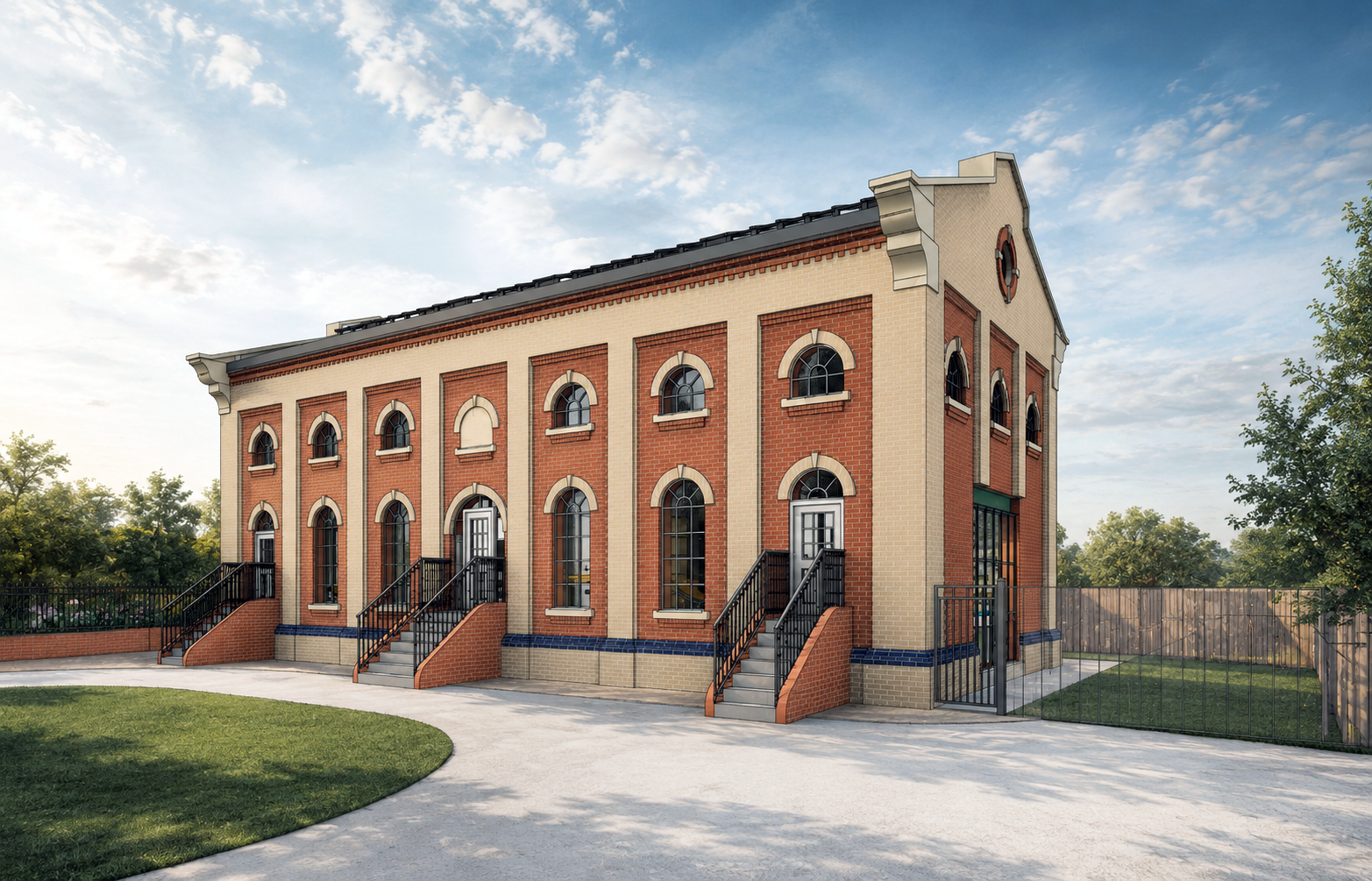
Not every project starts with a blank canvas. Some begin with a building that appears beyond saving.
This project involved the conversion of a redundant Victorian pumping station into three contemporary homes, breathing new life into a significant industrial building while preserving the architectural features that gave it its identity. Original brickwork, arched openings and the distinctive roof lantern were retained and restored, with modern glazing and carefully reconfigured internal spaces creating bright, spacious homes within the existing structure.
The design itself was only one part of the challenge.
The site presented a complex mix of planning, technical and environmental constraints. We coordinated specialist consultants and developed solutions covering heritage conservation, countryside planning policy, flood risk, highway safety, drainage, ecology, protected species, noise from neighbouring infrastructure and numerous neighbour objections. Every issue required careful design revisions and robust technical evidence before the proposal could move forward.
One of the biggest planning challenges was demonstrating that three homes—not one—represented the most sustainable long-term future for the building. Dividing the Pump House into three dwellings created the financial viability needed to restore the historic structure while keeping alterations to its external appearance to an absolute minimum.
Planning permission was successfully secured, ensuring this forgotten industrial landmark could be restored rather than lost. The project demonstrates that successful architecture is about far more than producing drawings—it's about understanding planning policy, coordinating specialists and solving complex problems to unlock sites that others may consider too difficult.
The result is three distinctive homes within a beautifully restored heritage building, proving that with the right strategy, even the most challenging buildings can be given a second life.